
I begin with a quote from Alfred North Whitehead’s Process and Reality:
In a previous chapter (Part II, Ch. X) attention has already been drawn to the sense of permanence dominating the invocation ‘Abide with Me,” and the sense of flux dominating the sequel ‘Fast Falls the Eventide.’ Ideals fashion themselves round these two notions, permanence and flux. In the inescapable flux, there is something that abides; in the overwhelming permanence, there is an element that escapes into flux. Permanence can be snatched only out of flux; and the passing moment can find its adequate intensity only by its submission to permanence. Those who would disjoin the two elements can find no interpretation of patent facts.
Whitehead, Alfred North, and David Ray Griffin. Process and Reality: An Essay in Cosmology. New York: Free Press, 1978., p. 338.
This is a beautiful quote pulled from Whitehead’s work, and falls in the area where he waxes poetic; towards the back of his book. It can be said that he is following his own process of how he sees the world; the romance, which lures one into the subject. The precision, which are the nitty gritty details in the middle of his text, and then the generalization, where one looks at what they have researched, learned, and reflects on how it engages the world.
This quote come from his chapter on ideal opposites, in which he enters into the dangers of narrowness of selection of evidence. He is stating a known fact; we hypothesize based on an idea (by way of reverie or dream or imagination (thank you Gaston Bachelard)), and we test wtihin a very specific selction, criteria, which is narrow, and experience that event. This abstraction may teach us and help us to understand a specific function or idea, but its danger lies in believing that the narrowness of this experience is the ideal of everything else. This is where Whitehead lifts up, in his own writing, the rising tides of thought and experimentation, Greek thought, Reinaissance, Enlightenment, as he advocates for the opening up of adventure, of questions, of intensification of experience.
He describes this narrowness as evil! Not because of it itself, but rather because we do not pursue beyond it itself, that we do not transcend it. He writes, “The evil, resulting from this distortion of evidence, is at its worst in the consideration of the topic of the final part of this investigation–ultimate ideals.” (337) An ideal is a conformation to a standard of perfection. However, we gain these ideals, at the least, by the narrowness of experience of one’s own context. We learn a certain set, a criteria, and from there we gain a set of ideals. But we are not meant to keep those values. Rather we challenge them (the flight of an airplane!) or test them, improving them, rethinking, and reimagining the symbolic representation of words, terms, images. This would be and ideal of ideals in process, that hold within the permanence and flux that we see in life itself.
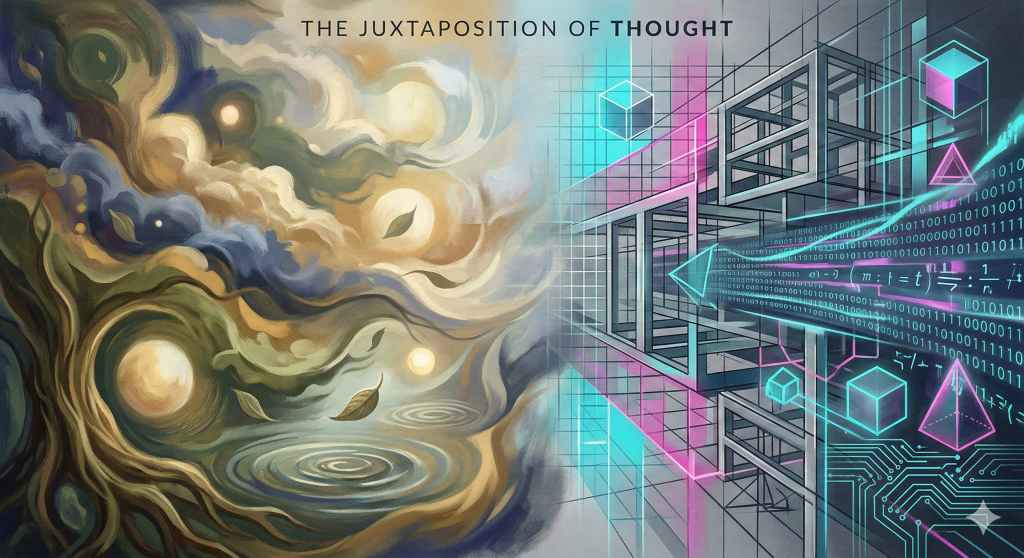
There is a debacle always between permanence and flux; Are we beings or becomings? Is objectivity or subjectivity important? How can we develop an ethics if there is no right and wrong? The list goes on. Whitehead reimagines this in his own work. He does not put the two against one another but rather shows how one cannot be without the other. They are fields of force that temper one another; in flux they exhibit objectiveity and permanence. In permanence they are something that holds and something that escapes: abide with me, fast falls the eventide. When brought into the question of ideals, ideals have a form of permanence and a form of flux. There is something that remains and something that always changes, and it depends on when and where the event occurs.
Ideals are meant to guide us, values that shape who we are. The fear is always will we lose our ideals? In it Whitehead writes, ” perfect realization…implants timelessness on what in its essence is passing. Time has then lost its character of ‘perpetual perishing’; it becomes the moving image of eternity.” (338) This falls in line with Whitehead’s idea of Nexus, on how that which is consistent persists, i.e. who we are. Let me continue. There is an essence to ideals that is permanent, that is important, that has purpose within a context. That same ideal, however, changes in the flux of time, and based on context. Nevertheless, there is an image, a moving image that we grasp that helps us reestablish what is most important, and what must change.
If I can make some broad strokes here, this is so similar to Gaston Bachelard’s work, in particular, Air and Dreams. There is both a permanence and flux to the image; the composite, upon reaching its height, breaks. However, what is revealed in the actual is what is timeless for the moment. The same applies in Henry Corbin’s work on the mundus imaginalis; there is a return to the importance of the imagination, the imaginal, or the imaginary in the becoming of an event, of ideals, of the symbolic.
(Also note, imaginary, imaginal, and imagination are defined in diverse ways. I am noting their intended goal)




 Process Imagining
Leave a comment